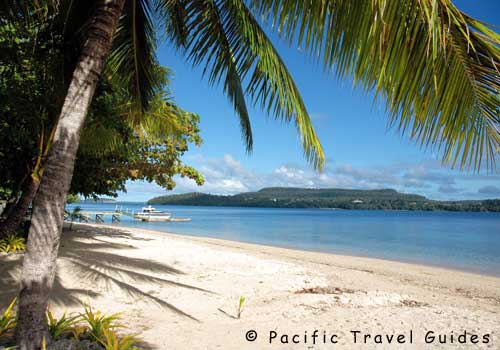
 | Beach in Vava’u Tonga __________________________
|
· Mofisi: The beginning of the turning of the tide as it comes in.
· Ufiafu’a: When the rocks at the edges of the reef disappear.
· fonohake: when the incoming tide begins to get deep and covers
half the sand on the beach that the sea usually covers at high tide.
· Hu’a: The incoming tide when the sea gets deep
· Tau: When the tide is full and has come all the way to the top where it usually ends on the beach.
· Tau matala: When the tide turns and begins to recede from the beach.
· Matupu: The tide is going out and leaves the sand further up the beach dry.
· Fonohifo: The tide has gone out more than halfway on the sandy beach
· Tuunga kiu: something you stand on & bird… the big boulders on the edge of the reef are exposed and the plovers are able to stop and rest on them.
· Mamaha: The tide is at its lowest leaving everything high and dry.
· Taumalie: The incoming tide floods all the way to the highest point on the beach that it can reach.
· Taulofuu: When the tide is all the way to the creepers (low crawling weeds that grow on the edge of the sand that connects the sand with the soil) and the waves rush in one after the next as if piled up one after the other.
· Taulòfuu… Also used when problems and issues are piling up one after the other.
· Mamaha fu’u: an extraordinarily low tide.
· Mamaha pakupaku: When the tide is all the way out and the edge of the reef is left high and dry.
· A’afa or ho’oko: No sooner has the tide gone out it comes back and comes back again. No low tide period. Common during the hurricane season.
· Fakalolo: The outgoing tide is low enough when the incoming tide comes right away. (Similar to the above).
· Fakafuli: the sea is rough with lots of waves and a strong current. (only when there is a hurricane).
